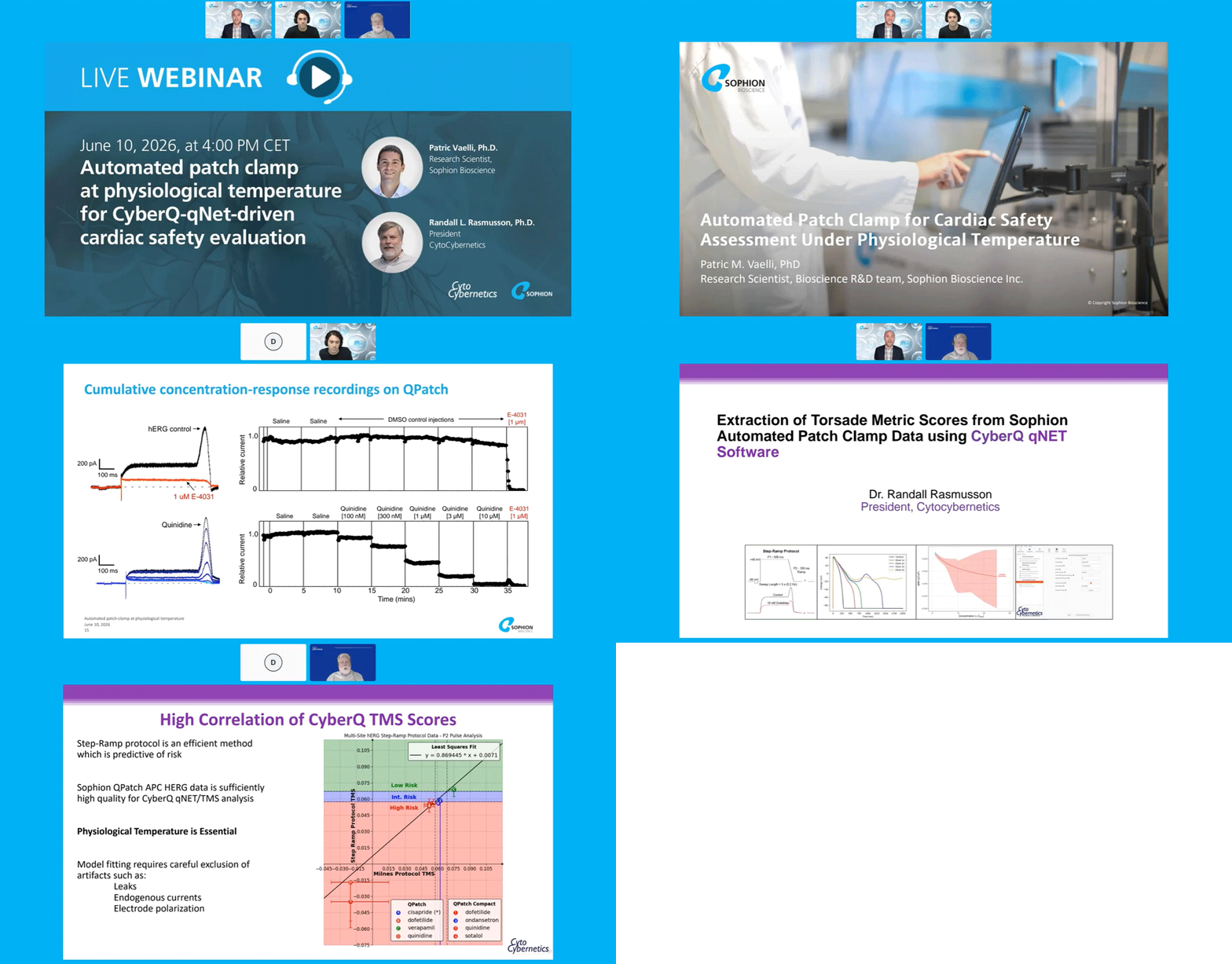
Sophion webinar recording: Automated patch clamp at physiological temperature for CyberQ-qNet-driven cardiac safety evaluation
Last week, guest speaker Dr. Randall Rasmusson from CytoCybernetics, together with Sophion’s Dr. Patric Vaelli and hosted by Sophion’s Dr. Daniel Sauter, led a webinar demonstrating how advanced automated patch clamp (APC) technology and CiPA-based in silico workflows can improve cardiac safety modeling for more reliable and predictive proarrhythmia risk assessment.
Dr. Patric Vaelli opened the webinar by presenting how Sophion’s QPatch and QPatch Compact automated patch-clamp platforms enable high-fidelity electrophysiology recordings at physiological temperature. He highlighted how optimized hardware design, stable seal formation, and standardized protocols help reduce variability and recording artifacts while delivering robust hERG data suitable for CiPA-aligned cardiac safety assessment and predictive screening.
Dr. Randall Rasmusson then demonstrated how high-quality APC data can be integrated into the CyberQ-qNet workflow for advanced in silico analysis. He explained how hERG recordings are processed through quality control, leak and reference subtraction, and kinetic modeling to derive Torsade Metric Scores (TMS) for TdP risk categorization. Using benchmark compounds, he illustrated how APC-derived datasets can support reliable, regulatory-relevant cardiac safety predictions within CiPA frameworks.
Attendees gained practical insights into generating physiologically relevant electrophysiology data, improving data quality and consistency, and translating APC recordings into predictive computational outputs. The webinar highlighted how combining experimental precision with in silico modeling can strengthen cardiac safety evaluation and support more confident decision-making in drug development.
Click below to watch the webinar and explore how integrated automated patch clamp and computational workflows are advancing predictive cardiac safety assessment.